From Heatwave to Action Plan: Why Climate Adaptation Can No Longer Wait for UK SMEs

Will Marshall
Founder

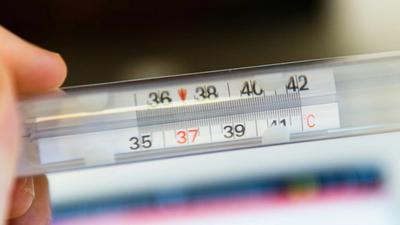
The record-breaking heat of summer 2026 is more than a run of uncomfortable days. After temperatures broke both May and June records, the Met Office directly attributed these extreme events to human-induced climate change — and yet the majority of UK businesses remain unprepared for what a warming climate means for their operations. For SMEs, the gap between awareness and action has rarely been more visible.
The Heatwave Is a Symptom, Not an Anomaly
It is tempting to treat each heatwave as a one-off. The science suggests otherwise. Met Office attribution research found that breaking the May temperature record is now around three times more likely in today's climate than it would be without greenhouse gas emissions. Extreme heat, in other words, is becoming a structural feature of the UK climate rather than an occasional outlier.
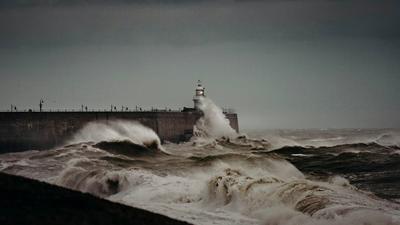
For businesses, that shift reframes the conversation. Heatwaves sit alongside flooding, storms, and supply chain disruption as climate risks that affect infrastructure, staff availability, and continuity. Many employers have already felt the immediate effects, from lost output to the practical challenge of keeping staff safe through a heatwave. The question is no longer whether these events will recur, but how prepared an organisation is when they do.
The Adaptation Gap Among UK Businesses
Despite mounting evidence, most businesses have yet to act. Research indicates that 74% of UK businesses have not assessed the risks that climate change poses to their operations. Among those that have reviewed their exposure, action remains limited: only 15% have addressed supply chain disruption, 9% have taken steps on rising temperatures, and just 6% have acted on flood risk.
This leaves a substantial share of UK SMEs exposed to events that are already happening. The cost is not hypothetical. Extreme heat alone costs the UK economy around £1.2 billion a year in lost productivity, while UK agricultural businesses are losing an estimated £1 billion a year to extreme weather.
Why SMEs Find Adaptation Difficult
The reluctance to act is rarely about disbelief. For most small businesses, the barriers are practical. Surveys consistently point to the same obstacles: financial constraints (28%), the high cost of tools and technology (26%), and time pressures (25%).
In other words, the business case for resilience is widely accepted, but the frameworks and resources to act on it are missing. Larger corporations have sustainability teams and adaptation budgets; a ten-person firm typically has neither. This is the central challenge of climate adaptation for SMEs — not a lack of will, but a lack of accessible, affordable structure.
The Cost of Waiting
Inaction carries its own price. Without further adaptation, the Climate Change Committee estimates the economic cost of climate change to the UK could rise to as much as £260 billion a year, equivalent to between 1% and 5% of GDP, within the next 25 years — a warning explored further in our analysis of the CCC's £11bn adaptation gap.
For an individual SME, the figures are smaller but the principle is the same. A flooded premises, a heat-related shutdown, or a disrupted supplier can each threaten a small business's survival far more acutely than they would a large one. Adaptation is, at its core, a form of risk management — and the cost of preparing is almost always lower than the cost of recovering.
Support Is Beginning to Arrive
There are reasons for measured optimism. The government's Small Business Plan, published in July 2025, set out a package of support for SMEs, with further guidance being developed through the UK Business Climate Hub. The private sector is moving too: AXA Insurance UK has launched a free training programme to help SMEs prepare for flooding and extreme weather through practical adaptation and resilience modules.
These resources lower the barrier to entry, but they still require businesses to take the first step. Adaptation planning need not be elaborate. A simple assessment of where a business is most exposed — its premises, its people, its supply chain — is enough to begin turning awareness into a concrete plan.
The Path Forward
The summer of 2026 has made the abstract tangible. Climate change is no longer a distant projection but a present operational reality, arriving in the form of red heat warnings and broken records. For UK SMEs, the lesson is not to despair but to prepare.
Building an adaptation plan, reducing energy demand, and understanding a business's environmental footprint are increasingly part of sound management rather than optional extras. By treating climate resilience as a routine part of planning — much like financial or operational risk — SMEs can protect their continuity while contributing to the wider transition.
Kickstart your journey into sustainable growth, with all the tools you need to get going at Bright.