Progress Without Targets: What CDP’s SME Study Reveals About the Reporting Gap

Will Marshall
Founder

Small businesses are often described as lagging behind on environmental action, but new disclosure data suggests the picture is more nuanced. Most smaller firms are doing something measurable, yet far fewer have set a target to direct that effort. The distinction matters, because customers, lenders and procurement teams increasingly ask for targets rather than activity.
What the CDP Analysis Found
Analysis published on 8 October by CDP, drawn from almost 11,000 disclosing companies, found that 95% of SMEs had made progress against at least one key environmental indicator. Close to 40% met all or almost all of the basic indicators assessed.
The gap appears when the analysis turns to emissions specifically. Only 20% of SMEs reported having emissions reduction targets in place, and just under a third had implemented reduction initiatives.
The scale of what that gap represents is considerable. SMEs account for around 90% of businesses globally and roughly 60% of commercial emissions, so the difference between activity and targeted reduction is material to national and corporate climate goals alike.
Why Targets Matter More Than Activity
Switching to a renewable electricity tariff, replacing lighting or reducing waste all count as progress. Without a baseline and a target, however, there is no way to say whether those measures are moving emissions in the right direction or merely offsetting growth elsewhere in the business.
Targets also change how a business is assessed externally. Procurement questionnaires rarely ask whether a supplier has taken action; they ask what the supplier's emissions are, what reduction it has committed to and by when.
The reporting environment reinforces this. As covered in our post on the FCA's comply-or-explain rules, listed companies will report against the UK Sustainability Reporting Standards from 2027, and their Scope 3 figures depend on supplier data that is consistent enough to aggregate.
The Sector Divide
CDP found notable variation between sectors. SMEs in manufacturing, materials, transportation and power generation performed most strongly against the basic indicators, while those in retail and services generally performed worse.
The pattern is unsurprising. Energy-intensive businesses already meter and monitor consumption closely because it represents a significant cost, so the data needed for carbon reporting is largely in place.
Service businesses face the opposite position. Their emissions are concentrated in purchased goods, services and travel, which are harder to measure and sit outside their direct control, so progress often stalls at the point where Scope 3 begins.
The UK Picture
CDP's analysis is global, but it aligns with what UK research has been reporting. Smaller businesses have built real capability over the past few years while competing priorities have pushed formal commitments further down the agenda.
A Better Bankside survey of its 900 members, carried out between January and March 2026, found sustainability had slipped to sixth place among business priorities, having ranked third in 2022. Economic uncertainty and rising costs dominated the responses, a pattern explored in our post on the SME sustainability slowdown.
That context explains the shape of the CDP findings. Measures that save money, such as energy efficiency and waste reduction, continue regardless of economic conditions, while target setting, which requires time and often external support, is more easily deferred.
The Case Against Rushing a Target
Setting a target badly carries its own risks, and there is a reasonable argument for taking time over it.
A target built on an incomplete baseline tends to require revision, which undermines credibility with the customers it was intended to reassure. Public claims also carry legal exposure: the Competition and Markets Authority can impose fines of up to 10% of global turnover for misleading environmental claims, and liability does not depend on intent.
There is also a capacity question. Many smaller firms have no dedicated sustainability resource, and a target that nobody owns rarely survives contact with a busy trading year.
How SMEs Can Close the Gap
The practical route between activity and a credible target is shorter than it appears.
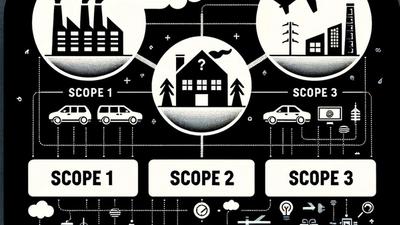
- Measure Scope 1 and 2 first: Fuel and electricity consumption are usually available from existing bills and provide a defensible baseline within weeks rather than months.
- Map the significant Scope 3 categories: A full value chain inventory is unnecessary at the start. Identify the two or three categories that dominate, typically purchased goods, transport or business travel.
- Set a target you can evidence: A percentage reduction against a stated baseline year, with a defined scope, is more useful to customers than a net zero date with no detail behind it.
- Assign ownership: Someone needs to hold responsibility for collecting data each year, even if sustainability is one part of a wider role.
- Build internal understanding: Training the wider team in carbon fundamentals means reduction initiatives come from across the business rather than from a single person.
The Path Forward
The CDP findings are more encouraging than the familiar narrative of SME inaction suggests. Most disclosing smaller businesses are making measurable environmental progress, and the foundations for reduction are being laid.
The remaining step is the one that converts effort into something external parties can assess. For SMEs weighing where to spend limited time, measuring a baseline and setting a target it can stand behind will do more than another individual initiative, and it makes every subsequent action easier to prove.
Kickstart your journey into sustainable growth, with all the tools you need to get going at Bright.