Burnham Holds the Line on Net Zero 2050: What Policy Certainty Means for SMEs

Will Marshall
Founder
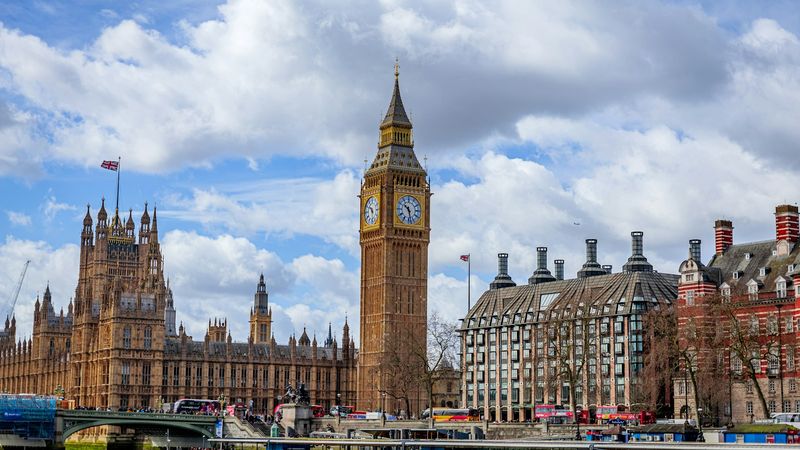
The political debate around net zero has sharpened considerably in recent months, with rising energy costs testing what was once a broad cross-party consensus. For UK SMEs, the question is less about the politics and more about planning: whether the direction of travel is stable enough to justify investment in efficiency, cleaner energy and emissions reporting.
This week provided a clear answer from Downing Street. Prime Minister Andy Burnham has reaffirmed the UK's commitment to net zero by 2050, even as a cross-party committee of MPs recommended dropping the phrase altogether.
What Happened: A Week of Mixed Signals
On 17 September 2026, the Commons Energy Security and Net Zero Committee published its report, Zero sum game: How the UK can reframe the energy transition. The committee warned that the term "net zero" has "lost much of its significant positive association" and now acts as "a lightning rod for opposition to climate action". It recommended removing the phrase from the name of the Department for Energy Security and Net Zero and reducing its use in government communications.
Importantly, the committee did not recommend abandoning the target itself. Its argument is about communication: that the public debate focuses on costs and fails to reflect the wider benefits of the transition, or the costs of inaction.
The Prime Minister's response was unambiguous. Writing in The Guardian, Burnham stated: "I am determined that we meet the commitment on which Labour was elected and reach net zero by 2050." The same day, Great British Energy opened £30 million of funding for community-led clean power projects, the first instalment of its £1 billion Local Power Plan.
Why Policy Certainty Matters for Business Investment
Most sustainability investments made by SMEs have payback periods measured in years rather than months. Solar panels, LED retrofits, heat pumps, electric fleet vehicles and building insulation all require confidence that the policy and market environment will remain broadly consistent over that period.
A clear commitment from the Prime Minister reduces one significant source of uncertainty. It signals that the legal framework, including the Seventh Carbon Budget, will continue to shape energy markets, regulation and procurement for the foreseeable future.
This matters beyond direct government policy. Large companies and public sector buyers set their own supplier expectations based on national targets. When those targets hold, requests for carbon data, sustainability credentials and reduction plans continue to flow down supply chains to smaller businesses.
The Economic Case Behind the Commitment
The Prime Minister's position is supported by a growing body of economic evidence. According to a June 2026 report by the Energy and Climate Intelligence Unit and the CBI, the UK's net zero economy now supports 1.1 million jobs and generates £105 billion in gross value added.
SMEs sit at the heart of this sector. The same research found that small and medium-sized enterprises make up 94% of the UK's 22,800 net zero businesses, spanning installers, engineering firms, consultancies, manufacturers and technology providers.
For businesses outside the sector, the relevance is indirect but real. A growing domestic supply chain for clean technology tends to improve availability, installer capacity and, over time, cost.
The Risks SMEs Should Still Weigh
While the commitment offers a degree of stability, several uncertainties remain that businesses should factor into their planning.
- Political risk: The Conservatives no longer support the 2050 target, and Reform UK opposes it outright. A future change of government could alter the pace or shape of policy, even if legally binding carbon budgets would be difficult to unwind quickly.
- Energy costs: Affordability remains the central pressure on public support. Under Ofgem's price cap for October to December 2026, gas unit rates are rising by around 27% year on year while electricity rates stay broadly stable. This strengthens the case for electrification but raises short-term costs for gas-reliant businesses.
- Pending decisions: The government has yet to decide on the Rosebank and Jackdaw North Sea oil and gas fields. The outcome will be read by markets as an indicator of how "pragmatic" the new administration intends to be.
- Delivery gaps: Ambition has not always translated into action on the ground. Retrofit heat pump installations fell by 22% in the first half of 2026, according to government deployment statistics, highlighting the gap between targets and uptake.
Practical Steps for SMEs
Regardless of the language used in Westminster, the underlying direction of travel is consistent. For businesses looking to act with confidence, there are several sensible steps:
- Measure your baseline: Understanding your Scope 1, 2 and 3 emissions provides the foundation for any credible plan and prepares your business for supplier data requests.
- Prioritise quick wins: Energy efficiency measures such as lighting, controls and behavioural change typically offer the fastest payback and reduce exposure to volatile energy prices.
- Review your energy strategy: With gas and electricity prices diverging, it is worth assessing whether renewable supply contracts, on-site generation or electrified heating make financial sense for your operations.
- Build internal capability: Training staff to understand carbon and its business impact helps embed change across the organisation rather than relying on a single individual.
- Watch for funding: Schemes such as the People's Power fund create opportunities for businesses to partner with community energy groups, for example by hosting rooftop solar.
The Path Forward
The debate over the phrase "net zero" reflects a real challenge in how the energy transition is communicated, but it does not change the destination. With the Prime Minister restating the 2050 commitment and legally binding carbon budgets in place, UK SMEs have a reasonably stable foundation on which to plan.
Businesses that treat sustainability as a long-term operational priority, rather than a political talking point, are best placed to reduce costs, meet customer expectations and benefit from a growing clean economy, whatever the terminology.
Kickstart your journey into sustainable growth, with all the tools you need to get going at Bright.